
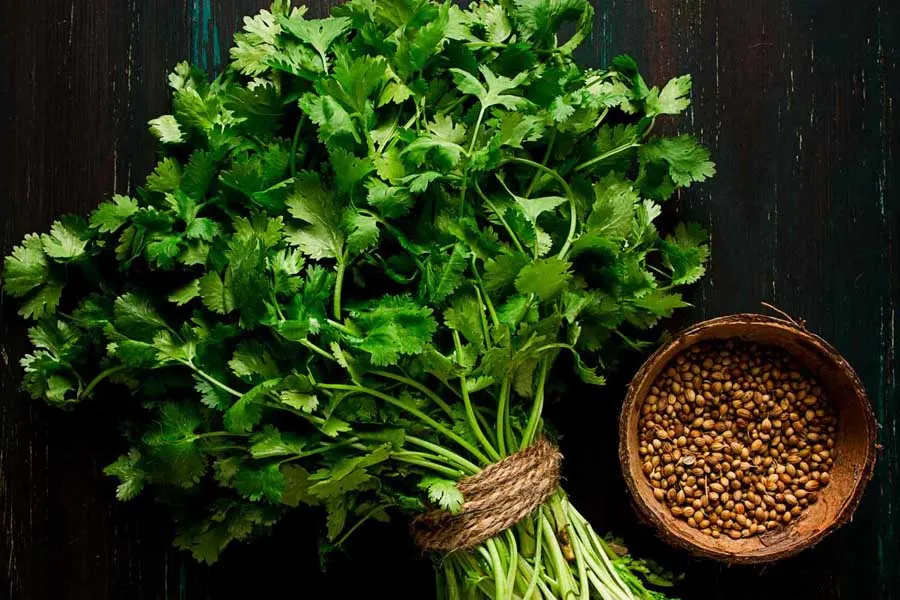
Coriander is an aromatic plant (Coriandrum sativum) in the parsley family. The fresh leaves of the plant are commonly called cilantro or Chinese parsley, and have a strong citrus flavor. The dried seeds are used whole or ground as a spice in European, Asian, Latin, and Indian dishes.
As an herb, coriander has always warranted a strong reaction—people either love it or hate it—but it’s a plant that is useful in its entirety—from roots to seeds and leaves. Ground into a fine powder or left whole, coriander seeds are a warm spice that can be added to sweet and savory dishes in cuisines from across the world.
Coriander powder is a common ingredient in Middle Eastern cooking, often combined with cumin and cinnamon. The subtle, nutty flavor of coriander seeds works best when used in spice blends, helping to pull together complex flavors.
What Does Coriander (Cilantro) Taste Like?
The coriander leaves should taste refreshing, tart, and citrusy. Coriander seeds are the plant’s dried fruit, which can be used whole or ground. Its flavor is earthy, tart, and sweet with a floral aroma that releases when toasted.
Cilantro vs. Coriander: What’s the Difference Between Cilantro and Coriander?
Cilantro and coriander are actually just two different words for the same plant. The plant itself is called coriander, and coriander seeds are the dried seeds from the plant. The fresh, leafy bunches you see in the produce department are the greens and stems of the plant. The leaves are known as cilantro in US, while elsewhere in the world they are called coriander.
What Does Coriander Look Like?
One of the easiest mix-ups in the produce section is between Italian flat-leaf parsley and coriander leaves (cilantro). While they look similar, you’ll find that coriander leaves are more delicate with rounded serrations.
Where Does Coriander Come From?
Coriander is native to regions from southern Europe and North Africa to southwestern Asia. It is one of the oldest herbs and spices recorded in history. The plant has mentions in the Bible, while seeds have been discovered in ruins from the Bronze age.